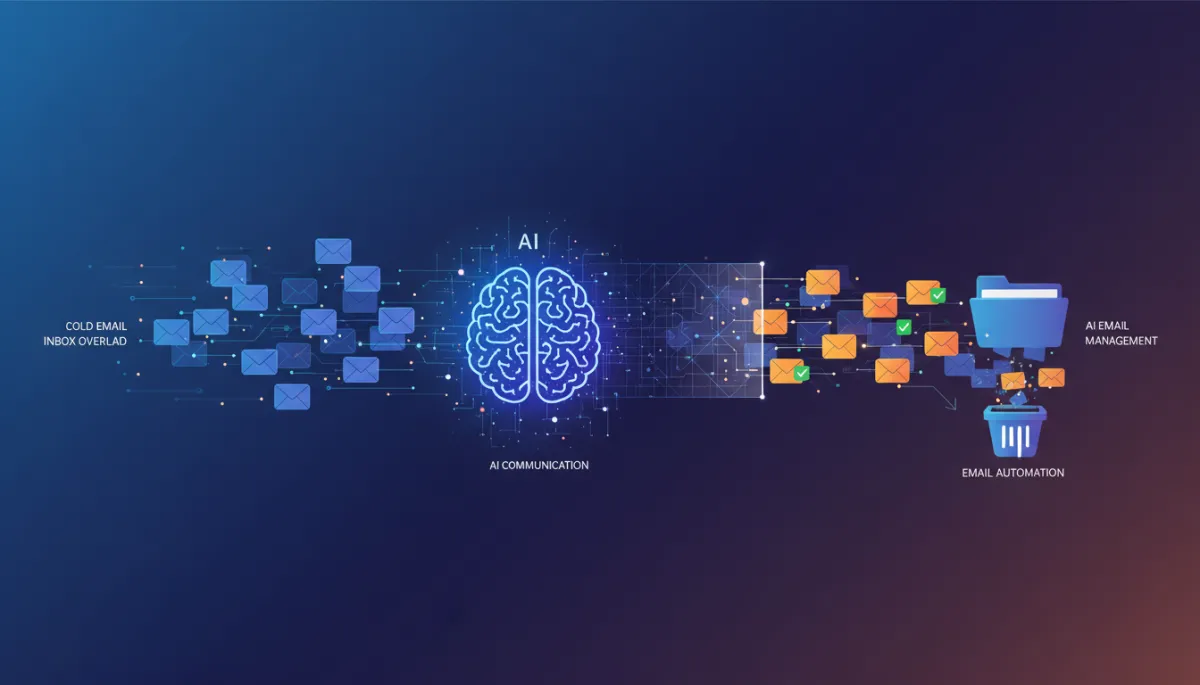
AI Solutions for Cold Email Overload
Cold Email, AI Email Management, Email Automation
Cold Email Chaos: How AI Broke the Inbox – and How AI Can Fix It
Cold email is exploding in volume thanks to AI. For businesses and agencies, that’s both a growing problem and an emerging opportunity. The bad news: inbox overload is getting worse. The good news: AI Email Management and intelligent Email Automation can now protect your team’s attention, filter the noise, and respond to routine messages at scale.
The Dark Side of AI: Why Cold Email Volumes Are Exploding
AI has made it dramatically easier to write and send cold emails at scale. What once required copywriters, sales teams, and careful targeting can now be done in minutes with a prompt and an email list. For businesses and agencies, this means your team is receiving more unsolicited outreach than ever before. Cold Email is no longer a trickle—it’s a firehose.
Generative AI tools can spin up thousands of “personalized” messages that reference your website, LinkedIn profile, or recent press coverage. On paper, this looks sophisticated. In reality, it often results in a flood of near-duplicate pitches, weak offers, and irrelevant proposals. The barrier to entry for mass outreach has collapsed, and your inbox is paying the price.
For leaders, this is more than an annoyance. Every extra minute spent triaging unwanted messages is a minute not spent on strategy, clients, or revenue-generating work. Multiply that across your team and the cost of Inbox Overload becomes very real—lost focus, slower responses to important opportunities, and mounting frustration with email as a channel.
Why Traditional Filters and Spam Rules No Longer Keep Up
Classic spam filters were built to catch obvious junk: strange domains, suspicious links, and keyword-heavy pitches. Modern AI-generated cold emails look different. They are grammatically correct, often polite, and superficially relevant. They mention your company name, your role, even recent content you published. To a traditional filter, they look legitimate. To a busy executive, they look like a time sink.
At the same time, you cannot simply shut off cold outreach completely. Some of your best partnerships, tools, and client relationships may have started with an unsolicited message. Agencies, in particular, rely on inbound opportunities—from vendors, freelancers, partners, and prospects—that arrive via email. The challenge is no longer “spam versus not spam.” It’s relevant versus irrelevant, and that requires a more intelligent approach to Email Filtering.
📌 Key Takeaway: AI has made cold outreach cheaper and faster, which means traditional spam filters are overwhelmed and your team ends up manually sorting what machines can no longer catch.
The Good News: AI Can Now Defend Your Inbox, Not Just Attack It
The same advances that fueled the cold email surge can now be used to protect your attention. Modern AI Email Management platforms act like a smart, always-on assistant for your inbox. Instead of simply flagging suspicious senders, AI reads and understands the content of each message, evaluates its relevance to your role and priorities, and decides what deserves your time—and what can be handled automatically or quietly archived.
For businesses and agencies, this is a game-changer. Imagine if every team member had a dedicated assistant who:
Reads every incoming email in real time and categorizes it by intent—sales pitch, client request, internal update, support issue, networking, or spam.
Flags only the messages that are genuinely important or time-sensitive for you personally.
Drafts smart, on-brand replies to routine inquiries, so you only need to skim and approve—or let the system send them automatically.
This is no longer hypothetical. With advances in AI Communication and Email Automation, it’s now possible to have AI “answer all emails and filter the important, relevant ones and handle the rest” with remarkable accuracy. Instead of drowning in AI-generated cold outreach, you let AI sit between your inbox and your attention, acting as a smart gatekeeper.
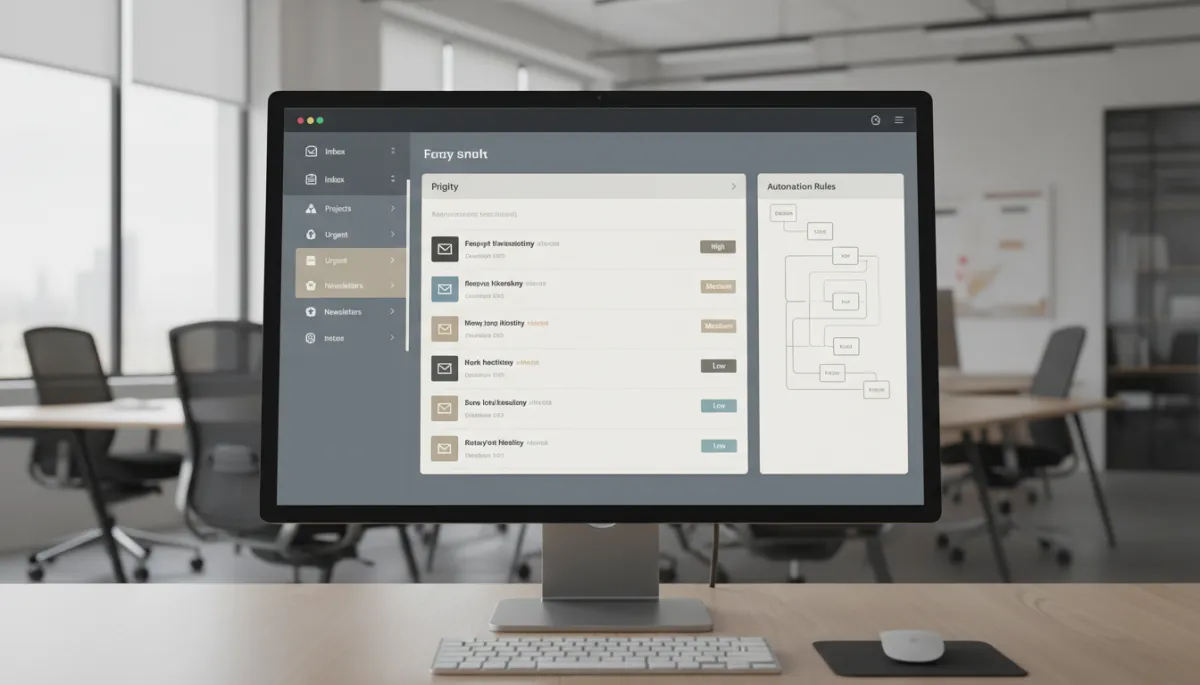
Centralized AI Email Management helps agencies see, sort, and automate inbox workflows at scale.
How AI Email Management Works in Practice for Businesses and Agencies
For leadership teams, it’s helpful to understand what’s actually happening behind the scenes. Modern AI Email Management tools go far beyond simple rules like “if subject contains ‘unsubscribe’ then spam.” They use natural language understanding to interpret the meaning and context of each message, then apply your business logic to decide what happens next.
Intent detection: The AI scans each email to determine why it was sent. Is it a vendor pitch, a client escalation, a job application, or a newsletter? This intent layer is crucial for accurate Email Filtering.
Relevance scoring: The system evaluates how relevant the message is to your role, accounts, and current priorities. A generic cold email about a random SaaS tool may score low, while a partnership inquiry from a known brand scores high.
Routing and automation: Based on rules you define, the AI can route emails to the right person or team, trigger workflows in your CRM or helpdesk, or send automated responses that set expectations and gather more information.
For example, an agency might configure AI Email Management so that:
Cold Email pitches from unknown tools go into a “Vendor Ideas” folder, summarized weekly for operations to review—without ever hitting senior leaders’ primary inboxes.
New client leads are automatically recognized, tagged with key details, and pushed into the CRM, with a polite, AI-written reply confirming receipt and suggesting next steps.
Routine status update emails are summarized into a daily digest, so managers can stay informed without reading every thread.
💡 Pro Tip: Treat AI as a layer between email and your core systems. When cold emails contain genuine opportunities, automation should ensure they land in the right pipeline—not lost in someone’s cluttered inbox.
Benefits for Agencies and Growing Teams
Agencies and B2B service businesses feel the pain of inbox overload acutely. Client expectations are high, timelines are tight, and every missed email can look like a broken promise. At the same time, teams are bombarded with cold pitches for tools, freelancers, and partnerships. Implementing AI Email Management and Email Automation delivers tangible benefits:
More focus time: Strategists, creatives, and account managers spend less time sifting through noise and more time on deep work that clients actually pay for.
Faster response to what matters: High-priority client and prospect messages rise to the top instantly, reducing delays and strengthening relationships.
Consistent tone and branding: AI-crafted replies can be trained on your agency’s voice, ensuring that even automated responses feel on-brand and professional.
Better data on inbound communication: With structured categories and intent labels, you gain insight into who is reaching out, about what, and how often—turning chaotic email streams into actionable intelligence.
Implementing AI Communication Safely and Strategically
Of course, not every email should be fully automated. Sensitive negotiations, complex client issues, and high-stakes decisions still require human judgment. The goal is not to remove people from communication, but to reserve their attention for the conversations where they add the most value. That’s why a thoughtful rollout plan matters.
Start with low-risk categories. Begin by automating responses to routine inquiries, newsletter signups, and basic vendor pitches. Keep humans in the loop for final approval until you trust the system.
Define clear rules and guardrails. Document which types of emails can be auto-answered, which should be summarized, and which must always be escalated to a person.
Train the AI on your voice. Feed it examples of your best replies so that AI Communication feels natural, respectful, and aligned with your brand.
When done well, AI becomes a trusted teammate, not a risk. It shields your team from the worst effects of AI-driven cold email while ensuring that meaningful opportunities still reach the right people quickly.
From Inbox Overload to Competitive Advantage
The rise of AI-generated cold email is undeniably bad news for unprotected inboxes. But for businesses and agencies willing to adapt, it’s also a catalyst to modernize how you handle communication. Instead of accepting inbox overload as the cost of doing business, you can turn AI Email Management and Email Automation into a competitive advantage—one that safeguards your team’s focus and ensures you never miss the messages that truly matter.
Cold email volumes will keep rising as AI tools become more accessible. You can’t control how many pitches get sent, but you can control how many reach your attention. By putting AI on the front line of your inbox—filtering, prioritizing, and responding—you reclaim control of your time, protect your team from digital fatigue, and build a healthier, more intentional approach to communication.
The future of email is not humans versus machines. It’s humans supported by machines—where AI handles the flood of cold outreach, and your people focus on the high-value conversations that grow your business.