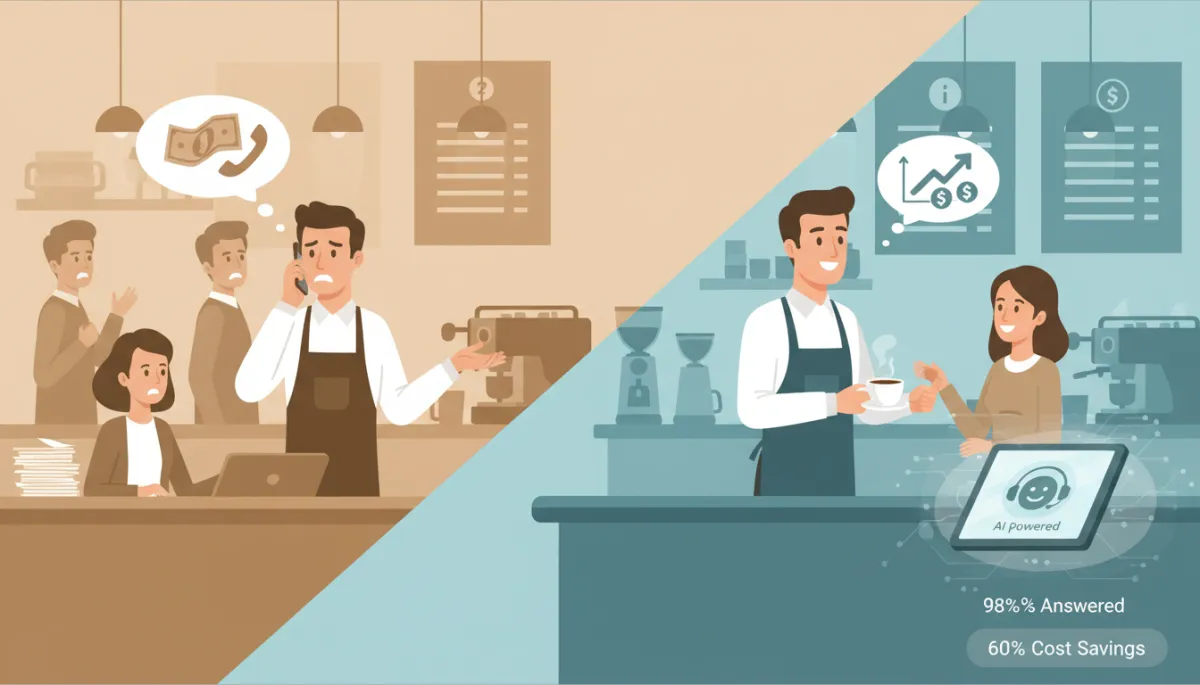
AI Boosts Coffee Shop Success with Automation
Local Business Success, Coffee Shop, AI Receptionist, Business Automation
How One Local Coffee Shop Owner Replaced Their Part-Time Receptionist with AI — And Finally Breathed Again
My name is Marvin, from HelpMeMarvin.com, and I want to tell you a story about a small Coffee Shop owner who was drowning in ringing phones, missed calls, and rising payroll costs — until an AI Receptionist quietly stepped in and changed everything. This is a warm, real-world story of Business Automation, Cost Savings, and Customer Service Improvement for a Local Business that simply needed a break.
Meeting Sarah: A Coffee Shop Owner on the Edge of Burnout
When Sarah first reached out to me, she didn’t start by talking about AI Receptionists, automation, or technology. She started with a sigh and a simple sentence: “I just can’t keep doing this.” Sarah owns a small but beloved Coffee Shop on a busy corner in her town. Locals love her cappuccinos, students camp out with laptops, and commuters grab their morning fuel there. From the outside, it looked like a Local Business Success story. On the inside, she was exhausted.
Her biggest unexpected problem? The phone. It rang constantly. People called to ask about hours, place catering orders, reserve tables for small meetings, check on gift cards, or see if they could host a book club. None of these calls were “bad” — they were signs of a thriving Coffee Shop — but they were pulling her attention away from actually running the place. She had hired a part-time receptionist to help, but that solution came with its own set of headaches and costs.
The “Before” Picture: Missed Calls, Rising Costs, and Constant Guilt
Before we brought in an AI Receptionist, Sarah’s Coffee Shop lived in a constant state of low-level chaos. The phone would ring while the line at the counter stretched to the door. Her baristas would look at each other, silently asking, “Do I pick up the phone or help the customer in front of me?” Too often, the phone went unanswered. She later learned that on busy days she was missing as many as 20–25 calls. That’s not just lost conversations — that’s lost revenue and frustrated customers who simply hung up and called somewhere else.
To fix this, Sarah hired a part-time receptionist to work the front desk phone and handle basic questions. It helped a little, but it created a new problem: cost. Between hourly wages, payroll taxes, and the occasional overtime when things ran long, she was paying around $1,400 a month just to have someone answer the phone a few hours a day, a few days a week. And even then, there were still gaps — evenings, early mornings, and weekends when no one was there to pick up. She was paying for coverage and still missing calls. The math, and the stress, just didn’t make sense anymore.
📌 Key Takeaway: Sarah was paying for a part-time receptionist, missing 20–25 calls on busy days, and still feeling like she was letting customers down.
The Emotional Toll: When Every Ring Feels Like a Failure
What struck me most when we first spoke wasn’t just the numbers — it was the emotion in Sarah’s voice. She told me about standing behind the counter, steaming milk for a latte, hearing the phone ring, and feeling a knot in her stomach. If she answered, the line of customers in front of her would wait longer. If she ignored it, she imagined a loyal customer on the other end, disappointed and thinking, “They never pick up the phone.” That’s a heavy emotional burden for any Local Business owner to carry day after day.
She also felt guilty about the money. She wanted to treat her staff well, and she did. But every month, when she looked at the books and saw that $1,400–$1,600 going out for a role that still didn’t give her full coverage, it stung. She wondered if she was being irresponsible or if there was simply no better way. The receptionist was a good person doing their best — this wasn’t about them. It was about a system that didn’t fit the reality of a modern, always-on Coffee Shop where customers expect instant answers and quick responses.
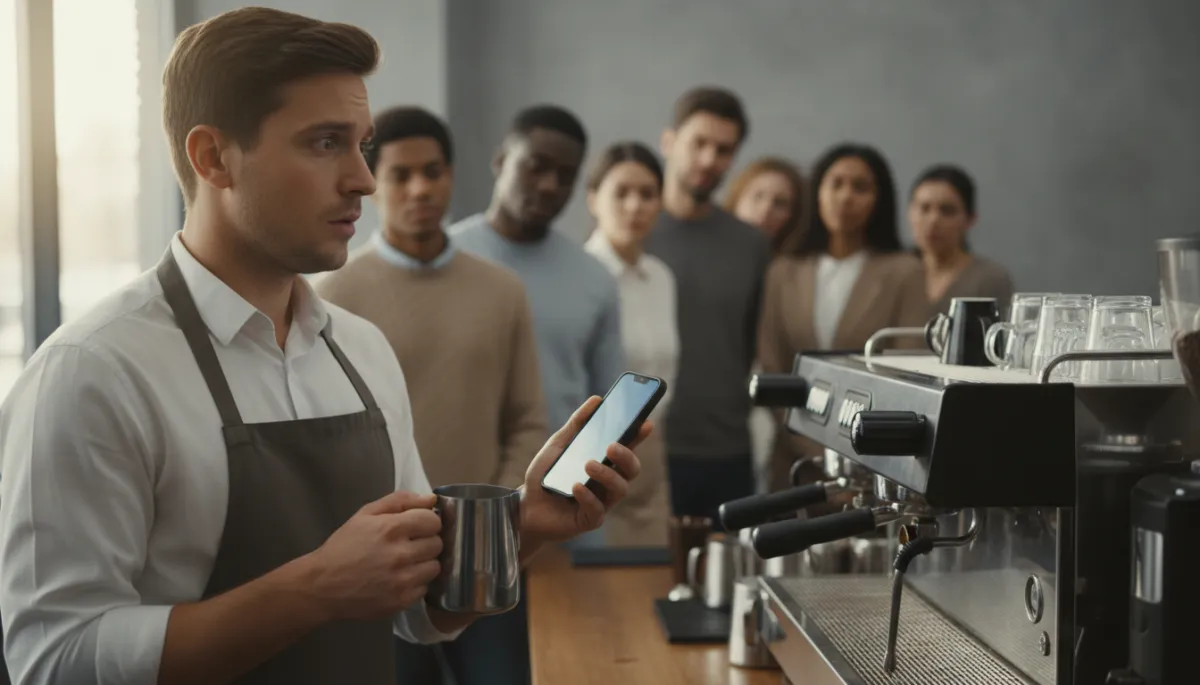
Before automation, every unanswered ring felt like lost revenue and a broken promise.
Our First Conversation: “What If a Machine Could Just Handle This?”
When Sarah found HelpMeMarvin.com, she wasn’t looking for a robot or some cold, impersonal system. She was looking for relief. On our first call, she said, “I don’t want to sound like a big corporate chain. I just want someone — or something — to answer my customers kindly when I can’t.” That’s where the idea of an AI Receptionist came in. Not as a replacement for hospitality, but as a way to extend it, 24/7, without burning her out or draining her bank account.
I explained that our AI Receptionist could answer calls, handle common questions, take catering inquiries, confirm hours, and even send follow-up texts with menus or links — all while sounding warm, natural, and distinctly “Sarah’s Coffee Shop,” not like a generic call center. We talked about Business Automation not as a buzzword, but as a quiet helper in the background, taking care of repetitive tasks so humans could focus on people, not phones.
💡 Pro Tip: The right AI Receptionist should feel like an extension of your brand’s voice, not a replacement for your personality.
Setting Up the AI Receptionist: From Skepticism to First “Wow”
We started simple. I asked Sarah to walk me through the top 10 questions her Coffee Shop received on the phone. Things like:
“What are your hours today?”
“Do you offer dairy-free or vegan options?”
“Can I place a catering order for Friday morning?”
“Do you have space for a group meeting?”
We then trained the AI Receptionist with her menu, her hours, her special seasonal drinks, her policies, and even the way she likes to greet people. We made sure it could answer questions naturally, route complex requests to her via text or email, and collect details for catering inquiries without missing anything important. The setup took days, not months, and we tested everything with real calls before going fully live.
Sarah’s first “wow” moment came when she listened to a call recording. A customer called asking about a gluten-free pastry option and whether they could bring in a small group for a morning meeting. The AI Receptionist greeted them warmly, answered both questions accurately, and then offered to send a text with a link to the Coffee Shop’s catering page. The caller said, “Thank you so much!” and hung up, completely satisfied. Sarah sat there, listening, and then said quietly, “That sounded like us.”
Calls Answered: From Missed Opportunities to 98% Coverage
Let’s talk numbers, because this is where the Local Business Success really comes into focus. Before the AI Receptionist, Sarah estimates she was answering or returning maybe 60–65% of calls on a good day. On busy mornings, that number dropped sharply. After we went live with the AI system, we tracked call metrics over the first full month.
Total inbound calls in the month: around 1,150.
Calls answered by the AI Receptionist: 1,098.
Calls missed or abandoned before connection: fewer than 25.
That’s roughly a 98% answer rate — far better than any part-time human receptionist could provide for the same cost. And remember, this coverage wasn’t just during business hours. The AI Receptionist was available early mornings when commuters called at 6:30 a.m., and late evenings when someone wanted to confirm Saturday hours. Every ring became an opportunity instead of a stress trigger.
📌 Key Takeaway: With AI handling calls, Sarah went from missing 20–25 calls on busy days to answering virtually every call, any time of day.
Money Saved: Turning a Cost Center into a Predictable Investment
Now let’s talk about Cost Savings, because this is where Sarah’s eyes really lit up. As I mentioned, she had been paying around $1,400 a month for part-time reception coverage. Some months it crept closer to $1,600 with extra hours. That didn’t include the time she spent training new people, dealing with scheduling conflicts, or covering shifts when someone called in sick. Those hidden costs add up quickly for any Local Business owner.
With the AI Receptionist, her monthly cost dropped to roughly a third of that — and the coverage expanded to 24/7. Instead of $1,400–$1,600 per month, she was paying under $500. In practical terms, that meant she was saving around $900–$1,100 every month, or more than $10,000 per year, while actually answering more calls and providing better Customer Service Improvement than before. The AI never called in sick, never needed overtime, and never forgot the specials of the day.
But the financial story doesn’t stop with savings. Because calls were being answered consistently, Sarah saw an uptick in catering orders and group bookings. Over that first quarter with the AI Receptionist in place, she tracked an additional $3,000–$4,000 in revenue from events and large orders that started with a phone inquiry the AI handled. Business Automation didn’t just cut costs — it opened doors that had quietly been closed when calls went unanswered or went to voicemail.
The Owner’s Relief: “For the First Time, I Left My Phone in the Back Room.”
Numbers are powerful, but I want to come back to the emotional journey, because that’s where the real transformation happened. A few weeks after the AI Receptionist went live, Sarah sent me a short message that I still think about: “For the first time since we opened, I left my phone in the back room and didn’t feel guilty.”
That sentence captures the owner’s relief better than any chart or metric ever could. She no longer jumped every time the phone rang. She didn’t feel torn between the customers in front of her and the ones calling in. She knew that every caller would be greeted warmly, given accurate information, and, if needed, seamlessly passed along to her via text or email for anything that truly required her personal touch. The AI Receptionist became a quiet, dependable teammate who never complained and never got tired.
She told me she slept better knowing that after closing time, when she was home with her family, the Coffee Shop was still “awake” in a sense — ready to answer questions, share hours, or capture a catering lead for the next morning. That’s the kind of peace of mind most Local Business owners rarely get to feel, and it’s one of the reasons I love doing this work.
Before and After: A Side-by-Side Look at the Transformation
To really appreciate this Coffee Shop’s journey, it helps to look at a simple before/after snapshot of life with and without the AI Receptionist:
Before: 20–25 missed calls on busy days, customers leaving voicemails or giving up, Sarah feeling a jolt of anxiety every time the phone rang.
After: Around 98% of calls answered, with friendly, consistent responses, and key inquiries passed to Sarah in a calm, organized way.
Before: $1,400–$1,600 per month for part-time reception coverage, plus the hidden cost of training, scheduling, and turnover.
After: Under $500 per month for AI Receptionist coverage, 24/7, with $900–$1,100 in monthly savings and increased revenue from captured calls.
Before: Sarah feeling torn, guilty, and exhausted — constantly choosing between in-store service and phone calls.
After: A calmer, more present owner who could focus on customers, staff, and the bigger picture of growing her Local Business.
📌 Key Takeaway: The “after” wasn’t just about technology — it was about giving a human being her time, energy, and peace of mind back.
What Customers Noticed (and What They Didn’t)
One of Sarah’s biggest fears was that customers would notice the change and feel like the Coffee Shop had “sold out” or become cold and robotic. The reality? Most callers never realized they were speaking with an AI Receptionist. What they noticed was that someone actually picked up the phone, answered their questions kindly, and helped them quickly. That’s the heart of Customer Service Improvement — not fancy features, but simple reliability delivered with warmth.
A few regulars did ask about the new system after noticing how consistently calls were answered. When Sarah explained that she was using Business Automation to keep up with demand while still staying small and personal, they were surprisingly supportive. Many of them run their own small businesses and understood immediately. One customer even said, “Honestly, if it means you’re less stressed and can keep this place going, I’m all for it.” That kind of encouragement reminded Sarah that technology, used thoughtfully, can actually strengthen the human connection instead of replacing it.
Is This Only for Coffee Shops? Not at All.
I’ve told you Sarah’s story because it’s vivid and relatable — you can almost smell the espresso and hear the milk steaming. But the truth is, this kind of Local Business Success isn’t limited to Coffee Shops. Any local business that struggles with phone calls, scheduling, basic questions, and thin margins can benefit from an AI Receptionist: salons, dental offices, auto repair shops, fitness studios, and more. The details change, but the emotional journey is often the same: overwhelmed, stretched thin, and quietly wondering how long they can keep going like this.
What I love about working with local businesses is that every implementation is personal. We’re not just dropping in a generic script. We’re capturing your voice, your values, and the way you like to treat people — then we’re using AI to make that experience available to more customers, more often, without burning you out or draining your budget. That’s the promise of Business Automation done right.
Your Turn: Imagine Your Own “After” Story
If you’re a local business owner reading this — whether you run a Coffee Shop, a small clinic, a spa, or any service-oriented space — I want you to pause for a moment and imagine your own “after” picture. Imagine looking at your phone logs and seeing that nearly every call was answered. Imagine checking your monthly numbers and seeing hundreds or thousands of dollars in Cost Savings because you’re not paying for part-time reception coverage that still leaves gaps. Imagine finishing a shift and leaving your phone in the back room, knowing that your AI Receptionist has things under control until morning.
Most importantly, imagine how it would feel emotionally to get some of your time and energy back. To greet customers without that constant background stress. To focus on your craft — whether that’s pulling the perfect espresso shot, giving a great haircut, or fixing a customer’s car — instead of juggling ringing phones and missed opportunities. That feeling of relief is what Sarah found, and it’s what I want for you as well.
From Marvin, One Human to Another
At HelpMeMarvin.com, I spend a lot of time talking about AI, automation, and systems. But at the end of the day, what matters to me is the human on the other side of the screen — the local business owner who is doing everything they can to keep their doors open, take care of their team, and serve their community. Sarah’s Coffee Shop is just one example of how an AI Receptionist can quietly step in and carry some of that load, turning missed calls into answered questions, unpredictable payroll into stable costs, and constant worry into genuine relief.
If you see yourself in Sarah’s story — if you feel that same knot in your stomach every time the phone rings while you’re already juggling a dozen things — I want you to know that you’re not alone, and you’re not stuck. There is a kinder, calmer, more sustainable way to run your business without sacrificing the personal touch your customers love. I helped one local Coffee Shop owner replace their part-time receptionist with AI and turn stress into stability, and I can probably do the same for you.