7 AI Prompts to Simplify Retail Management
AI Prompts, Retail Inventory, Small Business Tips, Pricing Strategies, Supplier Management, Customer Service Strategies
7 Ready-to-Use AI Prompts to Make Your Retail Life a Lot Easier
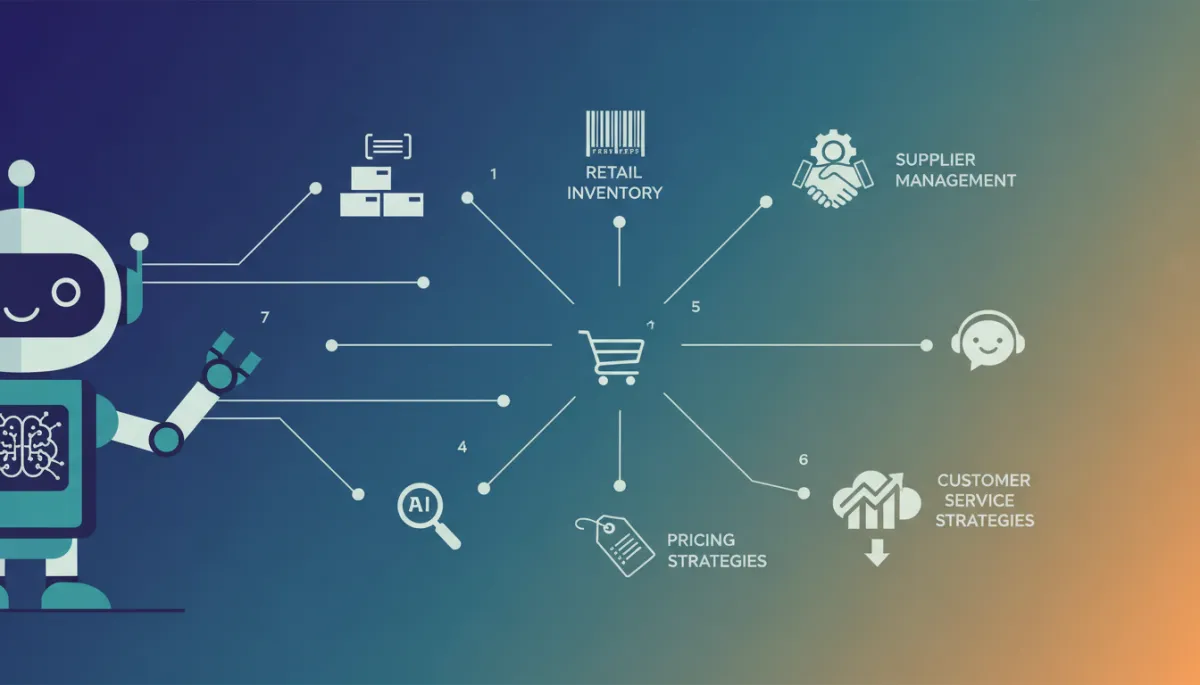
Hey, it’s me, Marvin from HelpMeMarvin.com. If you’re running a shop, boutique, or online store and you feel like you’re juggling Retail Inventory, suppliers, Pricing Strategies, and Customer Service all at once… you’re exactly who I’m writing this for today.
You’ve probably heard that AI can help you forecast demand, negotiate better with suppliers, and even write Customer Service replies. But nobody tells you exactly what to type into these tools. That’s where good, practical AI Prompts come in. Think of them as conversation starters that turn a generic AI into a focused assistant for your store.
Below, I’ll share 7 powerful, ready-to-use AI prompts covering:
Retail Inventory planning and demand forecasting
Supplier Management and negotiations
Pricing Strategies and promotions that actually make sense
Customer Service Strategies that save you time and keep customers happy
For each prompt, I’ll show you:
The exact wording you can paste into your favorite AI tool
Why it works (so you can tweak it later with confidence)
A real-world style retail example of how a small business could use it
Prompt #1 – Forecast Your Retail Inventory Like a Pro
Let’s start with one of the biggest headaches: having too much stock that just sits there, or not enough when people want to buy. AI is surprisingly good at spotting patterns in your sales and turning that into simple Small Business Tips you can act on quickly.
Exact Prompt:
You are an inventory planning assistant for a small retail business.

Using this data:
- Product categories
- Last 12 months of sales (including seasonal peaks)
- Current stock on hand
- Average supplier lead time

1. Forecast my inventory needs for the next 90 days.
2. Highlight which items I’m likely to overstock.
3. Highlight which items I’m likely to run out of.
4. Give me simple, bullet-point recommendations for what to reorder, reduce, or stop buying.

Ask me any clarifying questions you need about my store before you start.
Why this AI prompt works
You tell the AI its role (inventory planning assistant), so it stays focused on Retail Inventory instead of going off on tangents.
You specify the inputs (sales history, lead times, stock on hand), which mirrors how real inventory systems work (Forbes and RetailDive both highlight this kind of data as key for AI forecasting).
You ask for clear bullet-point recommendations, not just analysis, so you get direct Small Business Tips you can act on this week.
Real retail example
Imagine you run a small home décor store. You paste in your last 12 months of sales for candles, cushions, and wall art. The AI might respond with something like:
“You consistently sell out of scented candles every November and December. Increase pre‑holiday orders by 30%.”
“Cushions are overstocked by about 25% relative to demand. Pause reorders for 60 days.”
Suddenly your Retail Inventory decisions aren’t just gut feelings; they’re data-backed Pricing and purchasing Strategies you can explain to your team or your accountant without sweating.
Prompt #2 – Spot Demand Spikes Before They Hit Your Shelves
Demand sensing used to be something only big chains could afford. Now, with AI Prompts, even a small boutique can piggyback on trends from social media and search data without hiring a data scientist.
Exact Prompt:
You are a retail trend and demand-sensing assistant.

Based on:
- Current social media and search trends for my product category
- Typical seasonal patterns (mention my country and climate)
- My last 6 months of sales data

1. Identify 3 products or categories that are likely to see a demand spike in the next 60–90 days.
2. Suggest how much to increase or decrease my inventory for each.
3. Recommend 2–3 simple marketing angles I can use to promote these products.
Why this AI prompt works
It connects external signals (trends) with your internal Retail Inventory data, which is exactly how modern AI tools in retail are being used according to recent industry reports.
You’re asking for specific numbers (how much to increase or decrease), not vague suggestions, which turns this into real Small Business Tips you can plug into your order forms.
Real retail example
Say you run a small athletic wear shop. The AI might spot that “trail running” and “outdoor fitness” are trending locally. It could respond:
“Increase trail running shoes inventory by 20–25% for the next 90 days.”
“Promote a ‘Weekend Trail Starter Kit’ bundle (shoes + socks + water bottle).”
Now your shelves and your marketing are aligned with actual customer interest, not just guesses.

Turning raw sales data into clear AI-powered decisions keeps shelves balanced and cash flow healthier.
Prompt #3 – Use AI to Negotiate Better with Suppliers
Supplier Management isn’t just about finding the cheapest option. It’s about balancing price, reliability, and lead times so you don’t disappoint customers. AI can help you analyze supplier performance and even draft polite but firm negotiation emails for you.
Exact Prompt:
You are a supplier management and negotiation assistant for a small retail business.

Using this information:
- My last 12 months of orders by supplier
- Average delivery times and delays
- Return or defect rates
- Current purchase prices

1. Rank my suppliers from strongest to weakest based on reliability and value.
2. Suggest 3 concrete improvements I should request from my top 2 suppliers (e.g., better payment terms, lower minimum order, small price reduction).
3. Draft a professional but friendly email I can send to one supplier to negotiate better terms, using simple, human language.
Why this AI prompt works
You’re asking the AI to combine hard data (delivery times, defect rates) with practical Supplier Management advice, which is exactly how many modern supply chain AI tools operate today.
You also get a ready-to-send email, which removes the emotional barrier of “I don’t know how to ask for this without sounding rude.”
Real retail example
A small gift shop uses this prompt and discovers that one supplier has an excellent on‑time delivery record but slightly higher prices. The AI suggests:
“Ask for a 5% price reduction in exchange for slightly larger orders per quarter.”
“Request 45‑day payment terms instead of 30 days to ease cash flow.”
The AI then drafts a short, friendly email you can tweak in a minute and send off. That’s real Supplier Management help without hiring a consultant.
Prompt #4 – Get Smart, Data-Backed Pricing Strategies
Pricing can feel personal: raise it and you’re afraid customers will leave, lower it and you’re afraid you’ll never make a profit. AI can’t make the decision for you, but it can give you clear, data-driven options so you feel less like you’re guessing.
Exact Prompt:
You are a retail pricing strategy assistant.

Using:
- My cost price for each product
- Current selling price
- Last 6–12 months of sales volume
- My estimate of how price-sensitive my customers are (I will describe this)

1. Suggest 3 Pricing Strategies for my top 10 products (e.g., small price increase, bundle offers, limited-time discounts).
2. For each strategy, explain the likely impact on profit margin and sales volume in simple terms.
3. Recommend which 3 products I should test first and why.
Why this AI prompt works
You’re not asking for a single “perfect” price, you’re asking for options. That matches how real pricing teams work with AI: they test scenarios rather than chasing one magic number.
You’re tying Pricing Strategies back to margins and volume, which keeps the AI grounded in what matters for your small business bank account.
Real retail example
A local cosmetics shop runs this prompt for their top 10 items. The AI suggests:
Increase the price of a best‑selling moisturizer by 5%, explaining that demand has been stable even when prices rose slightly in the market.
Create a bundle of slow‑moving toner + best‑selling cleanser at a small discount to move inventory without killing margins.
Instead of guessing, you have a mini list of Pricing Strategies to test for 30 days and then review with the AI again.
Prompt #5 – Clear Out Old Stock Without Killing Your Brand
Excess inventory ties up cash and shelf space. But constant heavy discounts can train customers to wait for sales. This prompt helps you design smarter markdowns and bundles that respect both your margins and your brand.
Exact Prompt:
You are a retail markdown and clearance strategist.

Given:
- A list of products that have been in stock longer than X months
- Their current inventory levels
- Their cost price and current selling price
- Any upcoming seasons or events (e.g., back-to-school, holidays)

1. Propose 3–5 markdown or bundling ideas to reduce this excess inventory within 60 days.
2. For each idea, estimate the trade-off between speed of clearance and profit margin.
3. Suggest how to communicate these offers to customers so it feels like a benefit, not a desperate clearance sale.
Why this AI prompt works
You’re telling the AI your timing goal (60 days), which helps it balance speed vs. profit in its suggestions, just like advanced inventory tools do when they recommend markdown windows.
You also ask for messaging ideas, which turns this from a math exercise into a full Customer Service and marketing move.
Real retail example
A shoe store has too many pairs of last season’s sneakers. The AI suggests:
“Create a ‘Last Chance Comfort Collection’ at 20% off, limited to 30 days, and highlight that these models won’t return.”
“Bundle sneakers with socks at a slightly higher margin than discounting sneakers alone.”
You clear space, free up cash, and keep your brand feeling curated instead of like a bargain bin.
Prompt #6 – Turn AI into Your Front-Line Customer Service Coach
Customer Service Strategies are where small retailers can really shine. AI can help you design responses that are fast, kind, and consistent, whether you’re answering emails, social DMs, or chat messages at midnight from your couch.
Exact Prompt:
You are a customer service reply assistant for a small retail store.

1. I will paste a real customer message (email, chat, or social media).
2. You will write a friendly, concise reply in my brand voice: helpful, calm, and honest.
3. If the customer is upset, start by acknowledging their feelings.
4. Offer a clear next step (e.g., refund, exchange, tracking update, or request for more details).
5. Suggest a short subject line or opening line I can use.

First, ask me 3 questions to understand my store’s tone of voice and policies before you generate any replies.
Why this AI prompt works
You’re training the AI on your brand voice and policies before it writes anything, which is crucial for consistent Customer Service Strategies as AI tools become more common in small businesses.
You also specify emotional steps (acknowledge feelings) and practical steps (next action), so replies feel human, not robotic.
Real retail example
A customer emails your online bookstore: their order is late and they’re frustrated. You paste their message into the AI with this prompt. The AI might generate:
A subject line like “We’re on it – update on your book order.”
A reply that starts with, “I’m really sorry your book hasn’t arrived yet; I know how frustrating that is when you’re excited to start reading.”
Then it clearly explains the next step: checking tracking, offering a replacement, or refund, depending on your policy. You edit a word or two, hit send, and move on with your day.
Prompt #7 – Design a Simple, AI-Assisted Customer Service Playbook
Once you’ve used AI to handle a few customer messages, the next step is turning those answers into a lightweight playbook your whole team can use. This is where AI Prompts can help you step back and see patterns in your Customer Service Strategies.
Exact Prompt:
You are a customer service playbook designer for a small retail business.

Using:
- 10–20 recent customer messages and my replies (I will paste them)
- My store policies on refunds, exchanges, and shipping
- My brand voice guidelines (I will describe them)

1. Identify the 5–7 most common types of customer questions or problems.
2. For each type, create:
   - A short checklist of how my team should handle it
   - A reply template that we can personalize
3. Suggest 3 simple ways I can use AI tools to keep this playbook updated over time.
Why this AI prompt works
You’re turning one‑off answers into a repeatable system, which is exactly how bigger retailers scale their Customer Service without losing quality, and AI just makes it easier for you as a small business.
You get both checklists (what to do) and templates (what to say), which covers training for new staff and consistency for existing staff.
Real retail example
A children’s clothing boutique feeds 15 recent customer emails into the AI. The tool identifies common themes:
Sizing questions
Gift orders and gift receipts
Returns for items that no longer fit
For each, AI creates:
A 3–4 step checklist (what to check in the order, what to ask the customer, what options to offer).
A friendly template reply your staff can customize in seconds.
Now, whether it’s you, a part‑timer, or a new hire answering messages, customers get the same warm, reliable experience.
How to Start Using These AI Prompts Today (Without Overwhelm)
I know this can sound like a lot, especially if you’re already stretched thin. So here’s how I’d roll this out if I were sitting beside you in your store, laptop open, coffee in hand:
Pick just one area to start. If Retail Inventory is stressing you out the most, begin with Prompt #1 or #2. If you’re drowning in emails, jump to Prompt #6 or #7 first.
Give the AI real numbers. The more specific your sales, costs, and stock data, the better the suggestions. Even a simple spreadsheet is enough to start.
Treat it like a conversation, not a command. If the first answer isn’t perfect, reply with, “Make this shorter,” or “Focus on winter products only,” or “Explain this in simpler language.” That’s how you train it.
Test small, then expand. Try one Pricing Strategy on two products for 30 days. Test one Supplier Management email with one vendor. Use one Customer Service template for a week. Review, adjust, repeat.
Final Encouragement from Marvin
You don’t need to become a tech expert to benefit from AI. You just need a few well‑designed AI Prompts, a bit of curiosity, and the willingness to try small experiments in your store. The big retailers are already using AI for Retail Inventory, Pricing Strategies, Supplier Management, and Customer Service Strategies. These prompts are your way to tap into the same power at a small business scale that feels manageable and human.
If you bookmark just one thing from this article, let it be this list of 7 prompts. Copy them, tweak them, and make them yours. Every time you feel stuck on a decision, instead of spinning in your head, drop one of these into your AI tool and let it hand you a few clear options.
And if you ever catch yourself thinking, “I’m just a small shop, AI isn’t for me,” remember: AI is just another way to ask better questions about your business. You already do that every day. Now you’ve got 7 new questions ready to go.